
Prop: if you're thinking about the cenotaph.
память (memory)
The cenotaph does not have to be a large monument. It can be very simple: a stone, a tree, a plaque, a bench, a home corner, a memory page, a book, an annual meeting, or a small place to come. The main thing is not the form itself. The main thing is that the memory has a place to be alive with.
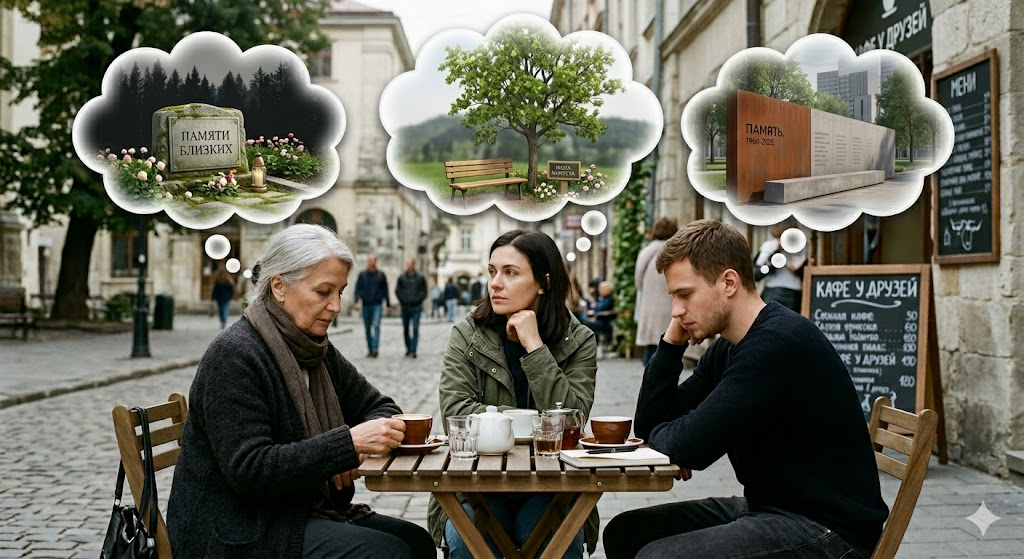
where to begin?
Before choosing a monument, material, inscription, or location, try asking yourself a human question rather than a technical one.:
What will help us remember this person carefully — without violence against ourselves?
Sometimes a family needs a place like a grave.
Sometimes it's a tree.
Sometimes it's a bench by the water.
Sometimes it's a page with photos and stories.
Sometimes it was just an annual meeting on a day that was important.
The cenotaph should not be “as it should be.”
It should be such that you can return to it.
________________________________________
WHAT IS IMPORTANT TO THINK ABOUT?
1. Is death confirmed?
If a person is buried elsewhere or his death is confirmed, the cenotaph can be a place of remembrance, farewell and commemoration.
If a person is missing and death has not been confirmed, it is important to be especially careful. For some loved ones, a symbolic place will be a support. For others, it may sound like giving up hope.
In such a situation, it is better to choose soft language.:
“In our memory...”
“We wait, we remember and we love...”
“Missing in action...”
“A place of hope, love and memory...”
You should not write as if everything is final, if it is not so for the family yet.
________________________________________
2. Who will need this place?
The cenotaph is created not only “for the deceased.” We need him alive.
But the living are different.
For parents, it can be a place of pain and love.
For a spouse, it is a place of conversation.
It is a way for children to understand that memory can have a form.
For friends, it's an opportunity to come and not feel like strangers.
It is a place of prayer for a religious community.
For non-religious relatives, it is a place of silence, history and human connection.
Before choosing a uniform, it is important to think
about who will come there and whether they will be able to feel in their place there.
Sometimes it is better to create not one common place for everyone, but several different forms of memory: family, public, digital, personal.
________________________________________
3. Won't the place be too heavy
Memory does not have to be gloomy, cold and solemn.
Sometimes a large monument looks “right”, but it is impossible to come to it without internal destruction. And a small bench, a tree, or a quiet corner provides more support.
A good place of memory allows a person not only to cry.
It allows you to be silent, sit, remember, get angry, smile, tell the children a story, come for a minute or stay for a long time.
The cenotaph should not require “proper grief.”
________________________________________
4. Does the cenotaph reduce a person only to death?
If a person died in a war, died in a disaster, was killed, went missing, or was a victim of violence, there is a risk that the memory of him will be reduced only to the circumstances of death.
But a person is not just how they died.
He lived.
Loved him.
He was laughing.
Worked.
He cared.
I was wrong.
I dreamed.
He had a voice, habits, favorite places, words, music, smells, things.
Therefore, it may be important to preserve not only the fact of loss, but also a trace of life in the cenotaph.
It can be a favorite phrase, a plant, a profession symbol, a photograph, a QR code with stories, a memory book, a song, an object, a color, a tree, a route of places associated with a person.
The Cenotaph should not only speak:
“he died,“
but also,
”he lived."
________________________________________
What can a cenotaph be like
The cenotaph may be:
A stone of memory - simple, calm, without heavy monumentality.
A tree - if a living, growing place is important to the family.
A garden of memory - if you want to come, sit, take care of, return in different seasons.
A bench is important if there is a place where you can be near the memory, and not just stand in front of it.
A memorial plaque - on a house, in a temple, at school, in a park, in a place associated with a person's life.
A home corner - if the family is not ready for a public place.
A digital page - if your loved ones live in different countries.
A memory book - if it is important to collect stories, letters, photographs, voices, drawings of children.
An annual meeting is if the family is closer to a living ritual rather than an object.
A good deed - a scholarship, a foundation, helping others, planting trees, supporting people in a similar situation.
Sometimes the most cherished cenotaph is not a monument, but an action that repeats itself.
________________________________________
What is better not to do?
You should not create a cenotaph too quickly if the family does not yet understand what they want.
It is not necessary to impose a form on those who are not ready.
It is not necessary to write “resting here” if the body or ashes are not there.
It is not necessary to make a monument in such a way that one part of the family feels: “we have been excluded.”
It is not necessary to turn the cenotaph into a duty that everyone is constantly guilty of.
It is not necessary to make a place of memory only about the tragedy, forgetting about the life of a person.
The cenotaph should be a pillar, not a new source of pain.
________________________________________
A few questions before choosing
You can discuss them with your family or just answer them for yourself.:
What do we want to keep in mind about this person?
Should this place be more about saying goodbye, prayer, silence, meeting or continuing communication?
Who will come there?
Will this place be accessible to the elderly, children, and friends?
Is it possible to sit there, be silent, be alone?
Does the chosen inscription sound too final?
Won't it hurt someone from the chosen form?
Who will take care of this place?
What would the person himself say if he could choose how to remember him?
There is not always an answer to the last question. But it often helps to get away from formality and get closer to a living memory.
________________________________________
The cenotaph doesn't have to be big.
It doesn't have to be expensive.
It doesn't have to look like an ordinary grave.
He must be honest, careful, and bearable for those who stay.
A good cenotaph doesn't make you forget.
It doesn't force you to “let go.”
He does not forcibly close the grief.
It just gives you a place where you can say:
"I remember."
"It hurts."
"you were."
"you were."
"your life matters.
The cenotaph does not replace a person with a monument.
It helps the memory not to be left without a place.
Before choosing a monument, material, inscription, or location, try asking yourself a human question rather than a technical one.:
What will help us remember this person carefully — without violence against ourselves?
Sometimes a family needs a place like a grave.
Sometimes it's a tree.
Sometimes it's a bench by the water.
Sometimes it's a page with photos and stories.
Sometimes it was just an annual meeting on a day that was important.
The cenotaph should not be “as it should be.”
It should be such that you can return to it.
________________________________________
WHAT IS IMPORTANT TO THINK ABOUT?
1. Is death confirmed?
If a person is buried elsewhere or his death is confirmed, the cenotaph can be a place of remembrance, farewell and commemoration.
If a person is missing and death has not been confirmed, it is important to be especially careful. For some loved ones, a symbolic place will be a support. For others, it may sound like giving up hope.
In such a situation, it is better to choose soft language.:
“In our memory...”
“We wait, we remember and we love...”
“Missing in action...”
“A place of hope, love and memory...”
You should not write as if everything is final, if it is not so for the family yet.
________________________________________
2. Who will need this place?
The cenotaph is created not only “for the deceased.” We need him alive.
But the living are different.
For parents, it can be a place of pain and love.
For a spouse, it is a place of conversation.
It is a way for children to understand that memory can have a form.
For friends, it's an opportunity to come and not feel like strangers.
It is a place of prayer for a religious community.
For non-religious relatives, it is a place of silence, history and human connection.
Before choosing a uniform, it is important to think
about who will come there and whether they will be able to feel in their place there.
Sometimes it is better to create not one common place for everyone, but several different forms of memory: family, public, digital, personal.
________________________________________
3. Won't the place be too heavy
Memory does not have to be gloomy, cold and solemn.
Sometimes a large monument looks “right”, but it is impossible to come to it without internal destruction. And a small bench, a tree, or a quiet corner provides more support.
A good place of memory allows a person not only to cry.
It allows you to be silent, sit, remember, get angry, smile, tell the children a story, come for a minute or stay for a long time.
The cenotaph should not require “proper grief.”
________________________________________
4. Does the cenotaph reduce a person only to death?
If a person died in a war, died in a disaster, was killed, went missing, or was a victim of violence, there is a risk that the memory of him will be reduced only to the circumstances of death.
But a person is not just how they died.
He lived.
Loved him.
He was laughing.
Worked.
He cared.
I was wrong.
I dreamed.
He had a voice, habits, favorite places, words, music, smells, things.
Therefore, it may be important to preserve not only the fact of loss, but also a trace of life in the cenotaph.
It can be a favorite phrase, a plant, a profession symbol, a photograph, a QR code with stories, a memory book, a song, an object, a color, a tree, a route of places associated with a person.
The Cenotaph should not only speak:
“he died,“
but also,
”he lived."
________________________________________
What can a cenotaph be like
The cenotaph may be:
A stone of memory - simple, calm, without heavy monumentality.
A tree - if a living, growing place is important to the family.
A garden of memory - if you want to come, sit, take care of, return in different seasons.
A bench is important if there is a place where you can be near the memory, and not just stand in front of it.
A memorial plaque - on a house, in a temple, at school, in a park, in a place associated with a person's life.
A home corner - if the family is not ready for a public place.
A digital page - if your loved ones live in different countries.
A memory book - if it is important to collect stories, letters, photographs, voices, drawings of children.
An annual meeting is if the family is closer to a living ritual rather than an object.
A good deed - a scholarship, a foundation, helping others, planting trees, supporting people in a similar situation.
Sometimes the most cherished cenotaph is not a monument, but an action that repeats itself.
________________________________________
What is better not to do?
You should not create a cenotaph too quickly if the family does not yet understand what they want.
It is not necessary to impose a form on those who are not ready.
It is not necessary to write “resting here” if the body or ashes are not there.
It is not necessary to make a monument in such a way that one part of the family feels: “we have been excluded.”
It is not necessary to turn the cenotaph into a duty that everyone is constantly guilty of.
It is not necessary to make a place of memory only about the tragedy, forgetting about the life of a person.
The cenotaph should be a pillar, not a new source of pain.
________________________________________
A few questions before choosing
You can discuss them with your family or just answer them for yourself.:
What do we want to keep in mind about this person?
Should this place be more about saying goodbye, prayer, silence, meeting or continuing communication?
Who will come there?
Will this place be accessible to the elderly, children, and friends?
Is it possible to sit there, be silent, be alone?
Does the chosen inscription sound too final?
Won't it hurt someone from the chosen form?
Who will take care of this place?
What would the person himself say if he could choose how to remember him?
There is not always an answer to the last question. But it often helps to get away from formality and get closer to a living memory.
________________________________________
The cenotaph doesn't have to be big.
It doesn't have to be expensive.
It doesn't have to look like an ordinary grave.
He must be honest, careful, and bearable for those who stay.
A good cenotaph doesn't make you forget.
It doesn't force you to “let go.”
He does not forcibly close the grief.
It just gives you a place where you can say:
"I remember."
"It hurts."
"you were."
"you were."
"your life matters.
The cenotaph does not replace a person with a monument.
It helps the memory not to be left without a place.