
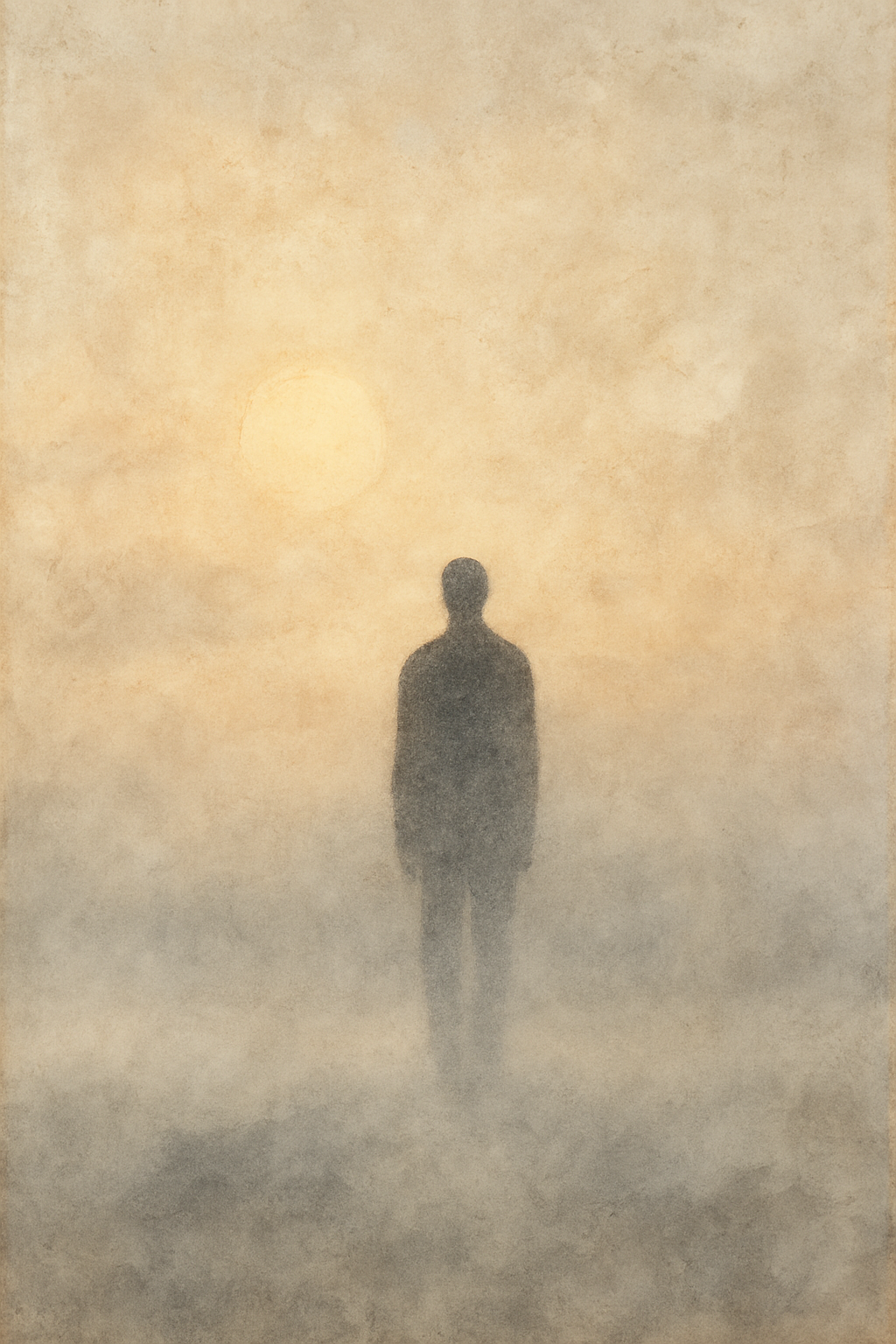
When death becomes the background of life.
material
When Death Becomes the Background of Life — and How Not to Lose Yourself in Its Shadow.
Edited version (polished)
We live in a time when death no longer feels like news.
It has become part of the background of our lives.
War, loss, messages in the feed: “killed,” “shelling,” “didn’t return.”
Even when your loved ones are alive, other people’s pain can wash over you every single day.
This is the constant backdrop of our present.
And all of us respond to it — just in different ways.
Some people go quiet.
Some grow angry.
Some throw themselves into work.
Some retreat into anxiety.
Some no longer cry — but they stop laughing too.
And this is normal.
It is a human response to what is not normal.
But when life becomes only about surviving, something essential can begin to slip away.
So what do you do when death is all around you — and you are still alive?
Pause.
Turn inward.
And ask yourself:
What gives me strength?
What has always helped me breathe more deeply?
What do I want to do — not for the news, not out of obligation, but for life itself?
Because your pain, your anxiety, your silence can become a source of warmth — not only for you, but for others as well.
Here are a few simple, real ways this can look:
Do you love walking?
Create a small group on social media. Share short videos from your walks — in a park, by a river, across an open field. Invite others to join. Nature calms. Movement brings life back into the body.
Do you love drawing?
Offer a small workshop for displaced children or children in temporary shelters. Draw the sun, a home, a dream together. Simple — and deeply meaningful.
Do you love reading?
If it feels possible, visit a hospital or a hospice. Read a fairy tale, a poem, or a short story out loud to someone who is alone. For some people, it may be the only human voice they hear all day.
Are you good at listening?
Offer a “quiet conversation” — in a courtyard, a church, a library. Just being present is sometimes enough.
Do you enjoy planting flowers?
Give away seedlings on the street. Plant a few near a school or a hospital. A small gesture — but real joy.
Are you good with your hands?
Sew heat packs, make blankets, knit socks — and pass them on to a hospital. Warmth, in the most literal sense.
Why does this matter?
Because when death feels close, we unconsciously shrink our lives.
We become quieter, greyer, more careful — and slowly disappear from ourselves.
But each of us carries something that can still shine, even in the dark.
Do what you can.
Do what you love.
And do it with this thought:
“This is how I choose to live.
This is my answer to the shadow.
This is my small light in the darkness.”
No one can make death disappear.
But we can refuse to let it become the only story our lives tell.
And even if it remains in the background,
we still have the right to be light in the foreground.
We live in a time when death no longer feels like news.
It has become part of the background of our lives.
War, loss, messages in the feed: “killed,” “shelling,” “didn’t return.”
Even when your loved ones are alive, other people’s pain can wash over you every single day.
This is the constant backdrop of our present.
And all of us respond to it — just in different ways.
Some people go quiet.
Some grow angry.
Some throw themselves into work.
Some retreat into anxiety.
Some no longer cry — but they stop laughing too.
And this is normal.
It is a human response to what is not normal.
But when life becomes only about surviving, something essential can begin to slip away.
So what do you do when death is all around you — and you are still alive?
Pause.
Turn inward.
And ask yourself:
What gives me strength?
What has always helped me breathe more deeply?
What do I want to do — not for the news, not out of obligation, but for life itself?
Because your pain, your anxiety, your silence can become a source of warmth — not only for you, but for others as well.
Here are a few simple, real ways this can look:
Do you love walking?
Create a small group on social media. Share short videos from your walks — in a park, by a river, across an open field. Invite others to join. Nature calms. Movement brings life back into the body.
Do you love drawing?
Offer a small workshop for displaced children or children in temporary shelters. Draw the sun, a home, a dream together. Simple — and deeply meaningful.
Do you love reading?
If it feels possible, visit a hospital or a hospice. Read a fairy tale, a poem, or a short story out loud to someone who is alone. For some people, it may be the only human voice they hear all day.
Are you good at listening?
Offer a “quiet conversation” — in a courtyard, a church, a library. Just being present is sometimes enough.
Do you enjoy planting flowers?
Give away seedlings on the street. Plant a few near a school or a hospital. A small gesture — but real joy.
Are you good with your hands?
Sew heat packs, make blankets, knit socks — and pass them on to a hospital. Warmth, in the most literal sense.
Why does this matter?
Because when death feels close, we unconsciously shrink our lives.
We become quieter, greyer, more careful — and slowly disappear from ourselves.
But each of us carries something that can still shine, even in the dark.
Do what you can.
Do what you love.
And do it with this thought:
“This is how I choose to live.
This is my answer to the shadow.
This is my small light in the darkness.”
No one can make death disappear.
But we can refuse to let it become the only story our lives tell.
And even if it remains in the background,
we still have the right to be light in the foreground.